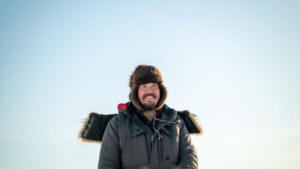
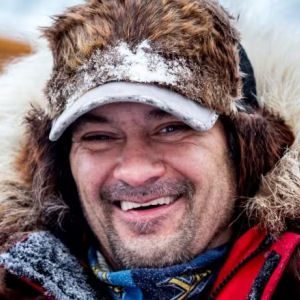
 Hugh Neff has finished 13 Iditarods, with his best placing of 5th in 2011.
He was awarded Rookie of the Year in 2004 when he finished 22nd, two places ahead of Lance Mackey, out of a total of 77 finishers that year.
Hugh was born in Tennessee and grew up in Illinois until 1995 when he moved to Alaska and began his dog mushing career.
He frequently runs Jim Lanier’s Northern Whites team.
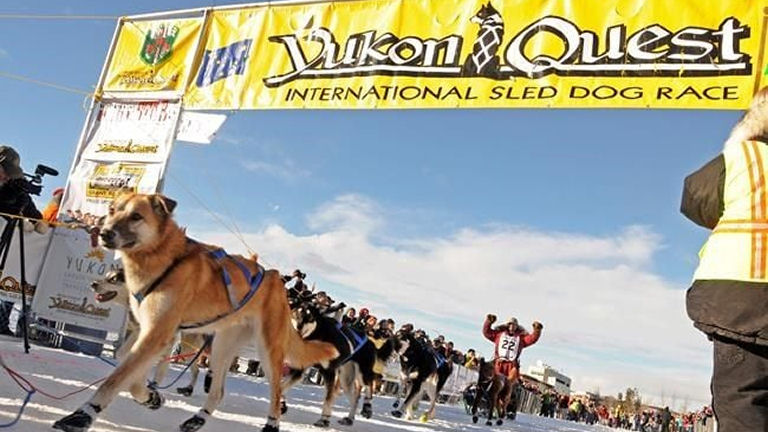
Hugh has won the Yukon Quest twice.
This interview was done over the phone with Faye back in 2021 at the height of the Covid-19 pandemic.
The Iditarod underwent some drastic changes, that year, in order to keep mushers and village natives safe.
Can people sponsor your dogs?
Yes, they can contact us through Facebook.
People can sponsor whatever they feel like.
We don’t really have a set standard.
I think out of the 20 dogs we have racing this year, there’s about 15 so far that have been sponsored.
So we still have a few left.
Then we basically will give the people an option of like two or three dogs, once they contact us.
I’ll send some pictures and stuff.
Then they can decide which dogs they want to sponsor.
If it’s a boy or a girl, or a young dog or an old dog, or a leader or team dog.
Do you do sled dog tours?
Tours, oh yeah.
Usually they’re just small little hour or two hour fun runs.
But we are willing, if people are interested, to do overnight trips as well.
Lots of beautiful country around here.
We do all types of tours, not just dog mushing, but we do the big tours up here for the northern lights.
They’re really good right now.
Tourism, surprisingly, even with the pandemic happening around the world, tourism in the Fairbanks area of Alaska is really pretty good this year.
It’s one of my dreams to see the northern lights.
I think people realise that Alaska is a safer place to go because we’re out in the woods here.
My dogs are my life, and I’ve heard you say this sometimes, too.
So is there anything else that you enjoy doing that doesn’t involve dogs, or like me is everything about the dogs?
Well, you know, growing up, I was an Eagle Scout in the Boy Scouts and you know, Lord Baden Powell from the UK would have created it.
Now it’s not even the Boy Scouts anymore.
It’s the Girl Scouts.
Well, they combined it.
We call it the Scouts now.
My dad was my Scoutmaster and we would go trekking in the woods so I really love just grabbing a backpack and going hiking.
The Iditarod is known as The Last Great Race, the Yukon Quest is known to be one of the toughest races in the world, which would you say is the most challenging?
Depends what you mean by challenging.
Iditarod, I find to be a little bit more difficult because there’s more bureaucracy.
There’s more humans involved.
Especially with COVID this year, lots of rules about quarantining before the race.
They’re getting tested throughout the race for COVID.
So a lot of my friends this year who are doing the Iditarod are going through a lot of issues.
The Quest can be more difficult weather wise, with the cold.
But as far as the wind up the coast of Alaska is, there’s really not much like it on Earth.
It’s really brutal weather.
So I would say overall, environmentally speaking, I’d say the coast of Alaska.
Iditarod is tougher than anything you see in the Quest.
It’s all about preparing and taking care of yourself and wearing the right clothing really.
Was there ever a time in your life that you dreamt of competing in the 1000 mile race, but thought you would never be able to make it?
Oh yeah, I grew up in Chicago.
So I was a golf caddy growing up for 15 years and didn’t have a lot of money.
My mom died when I was a little boy.
So my dad was taking care of five kids by himself.
So we weren’t super wealthy or anything.
We just were taught from the age of 12 to work.
So I had a paper round and then I was a golf caddy and just got lucky and found a job in Alaska.
Once I got here I was gonna make it happen no matter what.
Just perseverance and just always believing in what you can achieve.
Sometimes it doesn’t really happen the way you want it to, but if you stay consistent, sooner or later things will happen for you.
Have you ever had to scratch a race? Why, and how did that make you feel?
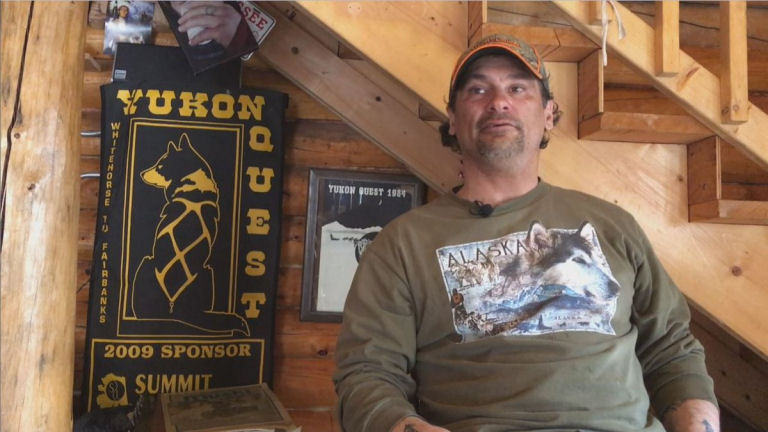
You know, on average, only half the team’s finish the Quest every year.
And about a third of the Iditarod teams drop out every year.
So I’ve had to scratch several times.
And it’s tough because you have so many people that are supporting you, you really want to do your best and all that.
But sometimes if the dogs have issues, or you’re not feeling up to it, or you never know what the circumstances might be.
Sometimes races are shortened because of bad trail or weather.
But you just got to realise life goes on and you just got to prepare for the next race.
That’s why we do so many races in one year.
It’s just not one big race.
We’ll do about five or six races throughout the year.
Are you doing the Iditarod this year?
No, I’m actually doing a race a couple of weeks after the Iditarod called the Kobuk 440 with my wife, Olivia.
We’re both going to be racing it together.
That’s up in Kotzebue.
The Iditarod is not going to Nome this year.
I just don’t really consider it to be the real Iditarod.
You know, they are calling it the Iditarod Loop.
But I do have dogs in the race with another musher.
But it’s just not going to be the same feeling this year at all, is it?
No, not at all.
COVID and other regulations, it’s a strange year.
That’s why the beauty of this year is that we’re able to pull off the Summit Quest race.
That really worked well.
My wife doesn’t like to talk about it, but she was pretty much running the show, her and a few other people, all volunteers.
The Quest has been going through tough times financially.
So for them to pull that off and have all the support from the community and folks throughout the world over the internet.
It’s been amazing, actually, the last week or so.
I actually messaged the Quest in the week to see if I could sponsor them or something or set up a page to raise some funds to help.
And I also spoke to the Kobuk 440. So I’ll be keeping my eye on you in that as well.
Interesting thing with the Quest, you just don’t know, when you’re contacting them, who you’re talking to you?
So you might have talked to the Canadian side, where the real side of the race is over on this side.
We have actually had some issues throughout the years with the Canadian side, because they actually get government funding for their side of the race whereas we’re scraping through sponsorships to keep this side alive.
Tell us which award means the most to you?
Which award means the most to me?
Oh boy, that’s a good one.
Man, that’s really good.
I like to tell people that the trophies aren’t the shiny things that are on your bookcase, they’re the furry things that are out in your dog yard.
So they’re my awards.
The time I’ve spent with them on the trail is the greatest gift you could ever have.
Everything else is just, I don’t know, it’s politics or it’s just people.
It’s very subjective.
Who gets what awards?
You know maybe you’ll get first, second or third because you do all the race.
But the other awards, whether it’s the humanitarian, or the sportsmanship or whatever, a lot of that’s just who gets along with who, not actually who did the most or did the best out there, which is just the way the world is.
But yeah, I’ve got a lot of beautiful trophies.
My favourite trophies are definitely the ones that are handmade or native made.
I’ve got some really amazing ones.
It must be the most amazing feeling to be out on the trail mid race, no people, just you and your team.
How does that actually feel to be out there in that situation?
Growing up in Chicago, I went for 12 years to a Catholic school.
And I always tell people, when I’m out on the trail, it feels like being in church because it’s like you’re in a heavenly atmosphere.
And we’ve got the biggest Cathedral in the world looking up at the stars, the Northern Lights.
I say that we’re not reading out of a book praying to God, we’re actually out there talking to God and you can just feel the energy of the Earth out there.
So a lot of people who live in civilization and crowded cities are almost taught to fear the wilderness.
Sadly, they don’t understand how amazing it really is and how if you know how to take care of yourself properly, you’re not afraid at all.
You’re living in harmony with life.
A wonderful way to describe it.
I know I’m a writer.
You’ve nearly got me in tears here.
How old were you when you entered your first race?
Well, I didn’t even move up here until I was 27.
Then in my very first race I was lucky, I went and lived in a native Athabascan Indian village up on the Yukon River, a place called Tanana.
So my first race was actually in a place right by Tanana called Minto.
It was called the Minto 90.
That was back in 98.
And since then, I’ve done thirty two 1000 mile races.
I started off with a little dinky village race that took two days with two 45 mile heats.
And that was back in 98.
And 23 years later, I have done quite a bit.
More than the trophies or awards to tell about the adventures and not only racing in Alaska and the Yukon.
But I’ve raced over in Germany and Australia, and I’ve done the Finnmarkslopet, which is up in Lapland and Scandinavia.
So I’ve seen a lot of the world and I’ve even been over to the UK a couple of times to do talks and visit with people and their dogs.
So that’s the true joy of mushing to me is just sharing the love of what we do with each other.
That sounds amazing. You’ve really lived a wonderful life.
You’ve got to stay positive, whatever you’re doing.
Do you ever plan to visit the UK again?
I would love to.
Last time I was there, I was in Nafferton and then went up to Sherwood Forest and then I was up in Edinburgh and all the way up to Aviemore.
I was all over the place.
My wife really wants to go back.
She used to live in Ireland.
I’ve never been there.
And we both want to go to the Isle of Skye.
So eventually one day hopefully.
My dad was actually from Ireland. I’ve always wanted to visit there as well.
We actually go to Sherwood Forest to race our dogs. So if you’re ever in the area, call us up.
Would love to meet you.
I don’t know if you know Sam Jackson.
That’s who I was staying with.
He organised it.
The funny thing was, I was all excited to see where Robin Hood was and all that, but then you get to the Sherwood Forest and you realise that the forest is so much cooler than the Robin Hood story.
Those trees are just amazing.
I know. That’s as far as I go to work my dogs.
I haven’t gotten the beautiful landscape that you’ve got.
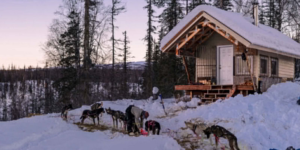
We’re very fortunate in the house that we live in.
My wife Olivia’s grandpa Leroy Shank created the Quest with a buddy.
We actually live in the house where it was created.
They had part of the name.
They wanted to call it the Yukon something and they had a dictionary on the dining room table.
They’re just leafing through it and he came to the Q’s and Leroy saw the word Quest.
That’s how they came up with the name Yukon Quest.
What’s the next big thing for you? What’s the next big dream?
Oh, just to help others out and try to make this a better world.
I’m a big native wannabe so a lot of my friends are Athabascan Indians and Inupiaq Eskimos.
So my life’s all about promoting the native lifestyle.
There’s a lot of hatred in this world, unfortunately, these days, just through politics and the pandemic.
Each one of us if we’re sitting on the sidelines and not trying to actively promote something positive, then I think we’re part of the problem. I’m just trying to come up with any way I can.
Whether it’s speaking tours or showing kids how to dog mush, or whatever, just you know, taking care of the fur babies every morning.
You just gotta stay true to what you believe in.
I’ll always be the dog musher.
You hear about all these mushers saying they’re gonna retire.
I don’t believe in that word. When it comes to dogs.
I’ll run dogs forever.
Are you planning on running the Iditarod next year on its 50th anniversary?
Oh yeah.
I plan on doing really good too.
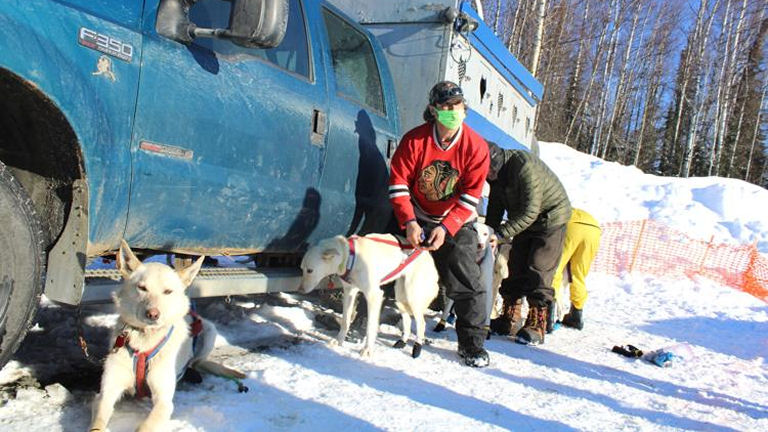
When did you get your first dog and what did they mean to you?
First dog was when I was a little boy in Chicago.
I grew up in a suburb of Chicago called Evanston.
If you ever saw the movie, Uncle Buck with John Candy, that’s where I grew up right in that neighbourhood.
We had a German Shepherd in the backyard named Scotty.
One day, he got loose from the pen, and I was a little boy like in kindergarten, playing in the sandbox.
And he came up and he bit me.
And instead of crying, when I went to school, the next day, from what I was told by my parents, I was telling all the other school kids that I was part dog now cos I got bit.
When I told my dad that I wanted to live the Alaska dog mushing dream.
He’s like, what are you doing with all the university education that I sent you to?
And I told them, this is all your fault.
You’re the one who had the dog sled in the garage, and you’re the one who had the James missionary book about Alaska.
So I warn parents, be careful how you treat your children, because you might just be creating a dream that you don’t even know about.
So it was all dad’s fault, then.
Not really, some movies like White Fang and Iron Will, just always, you know, Jack London stories and Robert Service poems.
It’s pretty hard not to fall in love with Alaska.
How long does it take you to get your team ready for a race?
There’s about 1000 miles or so, is what we’re going to put out.
Some people like to do formula training, I don’t really like it,
I’d rather just free run them.
We’ve gotten long lines off our yard to the line.
So the dogs can run up and down the hill and play with each other.
We do have neighbours, we have to be careful about letting dogs loose because you don’t want a rabbit to go flying by and there goes your whole dog team.
But we’ll start off doing, you know, 10-15 mile runs, then by November, we’re hopefully on the dog sled.
And this time of year, we’re doing camping trips, where we’ll run, five to seven hours and then camp out, then run home.
How do you feel when you cross the finish line after such a long race?
Depends on the race.
But like this last race I was bummed out, I wanted to keep going.
You know, the race was shortened this year because of the border being shut down.
Because of COVID.
But typically, whether it’s a 300 mile race or a 1000 mile race and get to the finish line, you’re tired.
And you know, you wouldn’t mind having a beer or two or three.
But realistically, you’re sad too.
Because you know, it’s the end of a journey and you have so many amazing memories that you just want to hold on to.
And having done so many races.
It’s just sort of funny how all these memories sort of all combine together and you don’t know what memory is from what year because you’ve done so much.
Do you have a story you can share about a time something happened whilst you were out with your team?
What the story I like to tell folks was you know people are always interested in dangerous or adventurous things you see out there.
So my first race back in 2000. A week or so before the race I was doing a little 10 mile run just to make sure the dogs were all looking good before the race and we always run them to keep their metabolism going so they’re eating well.
You get lazy dogs by letting them lie on couches. Anyhow, right as I was getting towards the kennel, I came round the corner of the trail and there was a moose right in front of the team about 200 feet just on the trail because it was a deep snow year.
And I knew I was in trouble because I knew that moose probably wasn’t going to want to go into the deep snow.
So I stopped the team, put my snow hook in the ground, ran up, grabbed a branch that was on the ground off of a tree and started waving the branch back and forth trying to get the moose to run away.
Meanwhile of course all the dogs are barking like crazy.
So of course the moose doesn’t run away, it starts coming after me.
So I dropped the branch and turned around and started running past the dog team towards the slip.
As I’m doing this, I’m looking at the sled and the snow hook comes out of the ground because the dogs are pulling so hard into the air.
My sled goes flying down the trail with the dogs When it gets near me, I reach out and try to hold on to it.
But it happened so quickly that I couldn’t and I ended up wiping on the ground.
And I’m watching my dog team fly down the trail.
Of course, the moose is there.
So when the team gets to the moose, they jump around the moose into the deep snow.
And the moose collides with the bow, the front part of my dog sled, and it gets its hoof stuck in my sled.
My dogs are going and actually pulling this moose backwards down the trail as I’m running after them.
Oh, my God, you must have been terrified.
I know looking back now it’s probably funny, but you must have been terrified.
Yeah, I wrote about it in a book I did about 10 years ago, called The Gypsy Musher.
You’re not terrified exactly, you’re pissed.
You want to get revenge.
So luckily, the moose flipped the sled back over and ran off into the woods and the dogs just waited for me at the cabin.
So it did end well, anyway?
I got back to the cabin about 20 minutes later.
The fellow that I was staying with, he was actually feeding the dogs, giving them a snack.
So they didn’t even notice that I was even back.
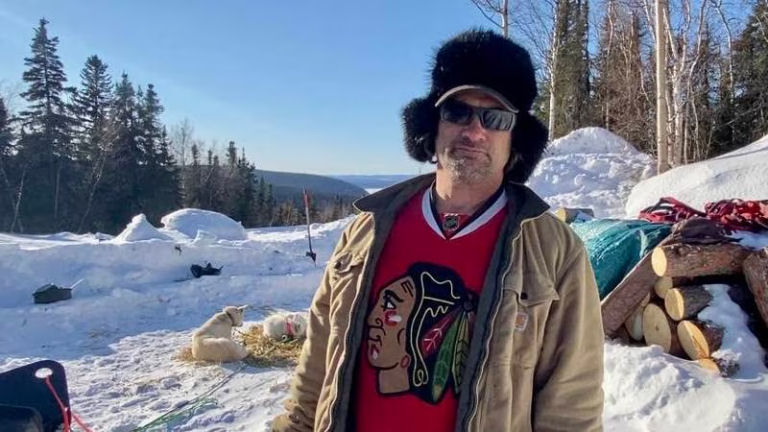
What is your greatest achievement?
Not giving up.
A lot of people give up on their dreams or they get pessimistic about life because bad things happen to them or they go through tough times.
Or they decide that they want to get old.
They’ve decided that their aches and pains and their bodies age and they’re like, oh, I can’t do this anymore.
But it’s all about learning how to take care of yourself.
So I don’t really look at winning races as a great accomplishment.
It’s icing on top of the cake.
For me it’s just day to day living and being able to enjoy the freedom that most people have no idea we have up here.
We are very lucky people.
I was just gonna say you’re very lucky people.
Tell us about the first time you hooked a team up to a sled. What was it like?
Well, the first time I was working for another musher.
So I was on the second sled and we had a cable line between the sleds.
And we whipped around the corner and I went flying off into the snow.
It was pretty intimidating.
But then you know, you get comfortable with it.
And I’d say within a couple months, I was doing overnighters by myself with a six dog team.
And it was magical.
I remember my first time camping out sort of spooky, you know, you’re worried about wolves and stuff you see on TV.
Realistically, as you get older you realise those wolves are a lot more afraid of you than you are of them.
They’re very shy creatures most animals are.
What kinds of things do you keep in your sled during a race?
Your gear, you know, your cooker, your cooler full of food, your dogs are eating 10,000 calories a day.
So you have to carry a lot of food.
Then you got your snowshoes, your axe, your booties, your medical equipment.
So usually about maybe 75 to 100 pounds of weight.
Sleeping Bag of course, too.
Tell us about your dog’s diet. What do you feed your dogs?
Well, the kibble we get is a higher fat protein ratio.
So it’s going to be very expensive.
I don’t know what would be in pounds, but in American dollars.
It’s $60 a bag.
They’re gonna eat 10,000 calories of food a day, when we’re training intensively.
And when we’re racing, lots of different types of fats, beef, some chicken, all types of foods, they eat better than most humans do.
Same with my dogs.
Vitamin Supplements as well are important.
But a big part of it isn’t just the eating or the running.
It’s the resting.
If a dog still doesn’t rest well, you’re not going to be very successful.
So that’s what we’re concentrating on.
It’s not just the running part but the resting part.
You’re gonna carry some straw to bed the dogs down.
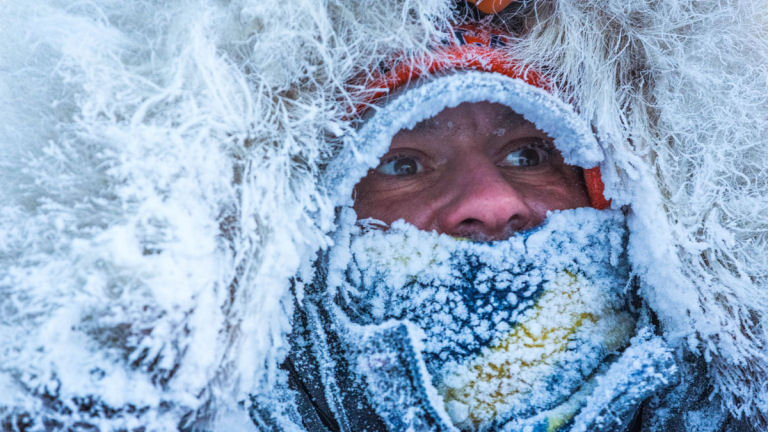
How did you go from golf caddy to musher?
Just you know, reading books.
I was still caddying, dreaming about racing.
I just kept on saving money, and then finally I had enough money from caddying to come up here.
But it’s just reading books and watching movies.
Have you ever got lost during a race?
Briefly, you know, the trails are really well marked with reflective little wooden sticks.
So it’s pretty hard to get lost.
Have you ever been injured whilst out on the trail?
It gets intense out there.
I wiped out my shoulders, stuff like that.
Froze my left foot one year.
All types of stuff.
When you have lived as much as I have, you’re gonna see it all.
What’s the most beautiful thing about Alaska?
The sunrise and the sunset every day.
It’s a magical place.
People don’t talk about it enough.
But the colours of Alaska, you see in very few places on Earth.
The pinks and the reds and the oranges of the two to three hours sunset and sunrise.
The green and purple northern lights.
Every day is just an abundance of beautiful colours up here.
It is very magical.
It sounds like it.
You are so blessed to live in such a wonderful place that most people, including me, can only dream of.
Whenever you come to visit here, we’ll take you for a dog ride.
I’ll hold you to that.
How much sleep do you get during a long race?
Oh, just a few hours a day.
I take care of the dogs while they’re resting.
So yeah, we’re not sleeping too much.
After a race is over and you go home, do you start training for the next race straightaway?
You’ll take a day or two off to relax and let your body recover. You’ve got other dogs back home that need to be trained too. Like I said, right now we’re training 22 dogs, so every day we’re busy doing something.
What advice would you give to anybody just starting up as a musher?
Don’t get too many dogs.
Keep it down, within 10 or less.
You can go a lot of places with a small dog team and give the dogs much more love and attention.
Unless you live in an environment such as Alaska or Canada.
If you’re in a civilised congested area it’s not good to have too many dogs because they’re just not gonna be able to do what we can do up here.
No, not thrive.
I would say a good headlight is essential for a sled dog race. What kind of headlight do you use?
We use Lupines they’re quite expensive but they’re the best there is around.

A huge thank you to Hugh Neff for taking time out of his busy schedule to speak to Faye on the phone.
Sorry it has taken so long for us to actually post the interview.
If you would like to find out more about Hugh Neff you can get his book “Tails of the Gypsy Musher” on Amazon
If you would like to sponsor Hugh in one of his upcoming races you can contact him via Facebook