northernwolf

sled dog information site

Interview with Matt Hodgson

matt hodgson british musher 006 northernwolf

matt hodgson british musher 600x600 northernwolf

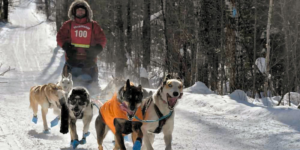
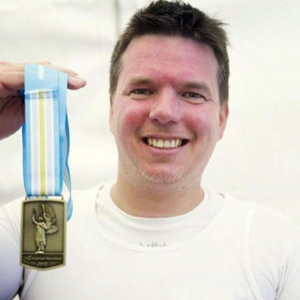
Matt Hodgson lives in Sussex and owns a world class sled dog team.

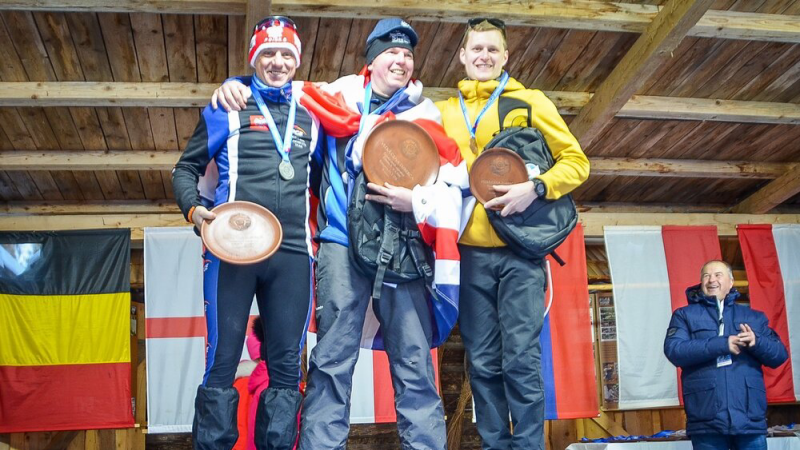
In 2023 he became Great Britain’s first ever Sled Dog World Champion on snow, winning the 4 Dog 2 Class at the WSA world championship in Vermiglio Italy.

Not an easy achievement for someone who lives in the UK with very limited access to train on snow.

Since 2015 Matt has competed at 11 International Events picking up 10 medals for Great Britain including 4 Gold and 3 Silver Medals.

Faye asked Matt about his sled dog team and his historic win.

Can I ask what breed you own, as I know a lot of people are racing different breeds these days, not just huskies?

I have 2 Canadian Eskimo Dogs and 4 Greenland Dogs.

You use the term husky, yet these dogs were the first dogs to be referred to as huskies.

There are lots of Husky dogs out there in various guises.

Of course these days, the Siberian Husky is the ubiquitous husky, but the reason they were called the Siberian Husky originally, was to differentiate them from the standard Husky that was there in North America already, which is now generally referred to as an Inuit Dog.

For me all dogs are amazing. It’s just about terminology. But I think it surprises many people in the sled dog world that the Siberian Husky isn’t the original “Husky”.

What made you choose this breed?

I’ve always loved the Arctic breeds from reading Jack London’s “The Call of the Wild” as a boy.  

As a teenager I used to collect up all the neighbourhood dogs for dog walks, just cos I loved it.  

>When it came time to have a dog of my own as an adult, I really wanted a “Husky”. 

My partner at the time was dead against having a “Wolfy” looking dog.  

One day in Pets at Home I saw a book about the Alaskan Malamute, a breed at the time I had never heard of, and was a rare breed in the UK.  

This set me on a path to what in the UK we refer to as Freight Mushing.  

Which is more about the breed than the speed.  

After all we can hardly offer real arctic conditions

What is it about them that you love?

I love the primitiveness of these dogs.

They’re such hard work, but so amazingly rewarding at the same time.  

>One of the reasons the Siberian Husky became so popular was they were much easier to handle than the traditional dogs.  

Even the Canadian Mounties used Siberian dogs ahead of native dogs for their patrols.  

Yet when expeditions to the North and South poles were needed, it was dogs from Greenland and Labrador which were selected as the dogs to get you there.

How many dogs do you currently own?

I have 6 dogs, 2 CEDs that are now retired and 4 Greenland Dogs.

matt hodgson british musher 007 northernwolf

Can you tell us a bit about them individually?

Invi and Ira are my two older CEDs, whose claim to fame is that their shared Grandfather has been to the North Pole more than any dog in history.

He was also part of the team that was on Top Gear when they raced dogs against a vehicle to the North Pole.

Lux and Ava are two Greenland pups I imported from Germany.

They took my pack to a different level, leading Invi and Ira to make us Great Britain’s first ever WSA world champs (Scotland already had achieved this through John and Mary Carter but under a Scottish banner not GB).

Pride and Nimis are two of Ava’s pups I bred and they now make up my 4 dog Greenland team.

Obviously you race competitively. Have you always competed or did it start out as a hobby?

It’s still a hobby.

One of the things I love with my type of mushing, is the fact there is no prize money.

Rightly or wrongly, money changes things for some and adds a different pressure.

Where I’m based and the environment I live in, it’s about having fun with my furry friends.

Would you talk us through some of your achievements?

I’ve been competing (using that term very loosely) for nearly 20 years.

In the last 6/7 years I’ve been competing at international events.

Where initially I was pretty much last, but over time I learnt and grew.

I’ve been a Dryland World Champion since 2019 in the 4 dog 2 category.

Which is your best achievement?

This year I took Gold on snow in the 4 dog 2 category at the WSA World Champs in Italy.

matt hodgson british musher 002 northernwolf

As we don’t often get snow here in the UK, most of us do dryland mushing. How would you explain what this is, to those that don’t know?

Dryland mushing started out as training sled dogs on wheels in the absence of snow.  

The original rigs replicated sleds with wheels.  

Over time it’s developed into its own sport and modern rigs are made with aluminium frames and high quality bike parts.  

Dogs can run much faster pulling these than a sled or the original dryland rigs.

Do you prefer dryland on a rig or snow with a sled?

For me the snow is always special, as primarily a lover of the arctic dogs

It’s the epitome of mushing to be on a sled.

You don’t just compete in the UK. Where else have you competed?

I’ve competed in Poland, Italy, Sweden, Germany, Austria, Slovakia.

I love travelling to new places and making new friends with people who share the passion.

Alaska has the Iditarod, and we have Aviemore. What happens at Aviemore?

You can’t compare. Aviemore was the annual pilgrimage of sled dog folk in the UK with a chance for snow.

Given current climates you’re not even guaranteed snow in areas of the Alps.

Also with pet passports etc it became easier for people to travel to Europe where you can find real snow trails.

matt hodgson british musher 003 northernwolf

What’s it like competing at Aviemore ?

I’ve been to Aviemore a couple of times many years ago.

One time the second day was cancelled due to ice.

Another time temps were too high.

Living on the south coast of England, the distance is similar to get to real snow camps in France or Germany.

How often do you train the dogs?

Weather dependent, I train or race typically 5 times a week.

Where do you train?

I have a couple of permits for forests in Sussex where I live.

What do you do in the summer months, when it’s hot?

Generally one benefit of this country is I can train year round except in really hot weather.

Summer training is often what I call a lazy dog walk.

The dogs will just trot along when it’s warm (this will be at 5 am etc when temps are lowest).

I don’t have a hard and fast rule in temps and training cos so much is down to acclimatisation, humidity and conditioning.

I pay a lot of attention to my dogs, their movement and keeping things low key.

matt hodgson british musher 004 northernwolf

You not only brought home Gold in the four dog race, you also secured a Silver medal in the two dog race. Both victories are amazing, but where do you go from here? What’s your next goal?

This is tricky.

I had an idea about going for the Polardistans world champs in a couple of years.

But I don’t possibly see how I could train for it from the UK.

Do you plan on racing overseas again this year?

Yes, hopefully I’ll be at the Dryland WC in Germany in Dec and then in snow in Austria in Feb next year.

Do you follow the Iditarod?

I have in the past, particularly in my earlier days in the sport.

Are there any Iditarod mushers you look up to?

All of them.

I think they’re all as mad as a box of frogs (in a good way).

Do you think that competing in the Iditarod is something you would one day like to do yourself?

There’s no comparison between what I do and they do, it’s like two different sports.

A hundred metre runner compared to an ultra marathon runner.

I can get up, drive to the forest, come home, shower and go to work and they may still be mid way through a training leg when I get home.

Once upon a time I had Iditarod dreams, but the longer I’ve been in the sport, the more I’ve decided to focus on what the sport means to me.

matt hodgson british musher 005 northernwolf

What do you think the differences are between being a UK musher and an Alaskan musher?

There’s too many to count, it’s just not comparable in my opinion.

Most UK mushers are breed enthusiasts or running hound crosses.

But all are short distances.

We don’t have the space or the climate to even contemplate the distances they run.

There’s space for everyone to enjoy their version of the sport in the best way that suits.

Whilst competing have you ever had any near misses? What’s the scariest thing that’s happened?

The first time on a sled I fell off and watched my team carrying on into the distance as I failed to hold on.

How do you know what makes a good lead dog?

A good lead dog teaches you.

You develop a bond and trust over time where you rely on each other.

It’s probably far less important in a small team compared.

I mainly want good forward orientation, drive and speed.

matt hodgson british musher 001 northernwolf

I would like to thank Matt for taking part in this interview. He has a lot on his plate with a full time job, and training his dog team and competing around the world.

You can see more of Matt’s dogs on his website at infurysleddogs.co.uk